Why AI doesn’t know what your roof costs
Ask ChatGPT what a new roof costs and you get a confident number in about two seconds. The number is an average of other people’s houses. Here is exactly which facts about your roof decide the real figure — and why none of them ever reach the model.
First — AI is genuinely useful here
This is not an argument that you should stop using it. We would rather talk to a homeowner who has done an hour of reading than one who has done none, and AI is a good way to do that hour. It is worth being precise about where it stops working, because that line is narrower than people assume.
-
Learning the vocabulary
Underlayment, step flashing, tear-off versus overlay, Class A assemblies. AI is a fast, patient way to learn what the words on a roofing estimate mean before you sit down with a contractor.
-
Getting a rough order of magnitude
Is this a few-thousand-dollar repair or a five-figure replacement? For that question a broad average is a reasonable answer, and knowing it keeps an honest quote from blindsiding you.
-
Working out what to ask
Ask it for questions to put to a roofer and you will get useful ones. That is a genuinely good use of it, and it makes the estimate conversation sharper.
-
Sanity-checking a claim
If something a contractor told you sounds off, AI is a quick second reference for whether it is standard practice. It is a reasonable check, though not the final word.
Six things that decide your number
Every one of these is a property-level fact about your specific house. A model has none of them, and it produces a number anyway.
-
The shape of your roof
Valleys, dormers, skylights, chimneys and pipe penetrations each add labor and flashing. Two roofs with identical square footage can differ substantially once one of them has four valleys and three dormers.
A model would need to know: Every plane, valley and penetration on your roof, plus the condition of the flashing at each one.
What actually drives the price here -
What is under your shingles
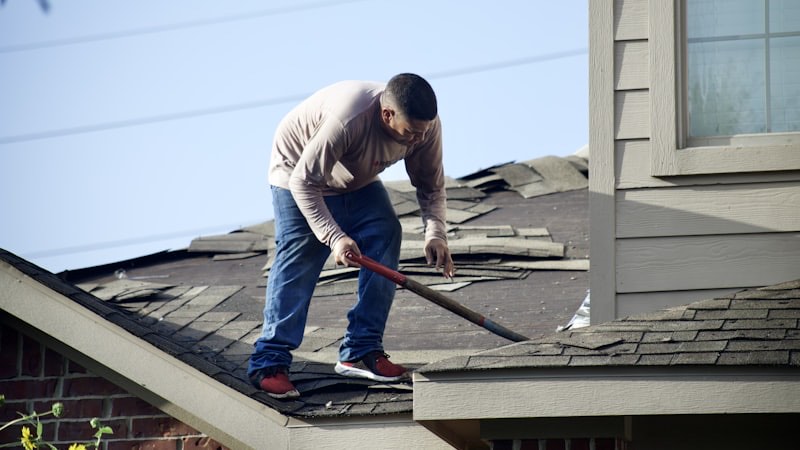
How many old layers have to come off, and what condition the wood deck is in once it is exposed. Almost every North Bay home built before 1990 needs at least some sheathing repair — and nobody knows how much until the old roof is off.
A model would need to know: The number of existing layers and the condition of sheathing that is currently covered by a roof.
Tear-off vs. overlay -
Whether your parcel is in a WUI zone
Most Marin hillside parcels sit in a designated Wildland-Urban Interface zone, where the roof assembly has to be Class A fire-rated. That rules out the cheap builder-grade shingle most averages are built on. If your current roof is not Class A, you are upgrading, not replacing like-for-like.
A model would need to know: Your exact parcel and its fire-hazard designation — which is a property-level fact, not a regional one.
Class A fire-rated roofs in WUI zones -
California Title 24, on your roof
The state energy code sets minimum reflectance values that apply the moment you re-roof, and they bite hardest on flat and low-slope sections. Which of your roof sections are low-slope decides whether this is a factor at all.
A model would need to know: The slope of each section of your roof, and how much of it is low-slope.
Title 24 and your roof replacement -
How hard your house is to reach
A lot of Marin sits on a hill. If a truck cannot get close, material goes up by hand and debris comes down the same way, and the labor on the job changes accordingly. A flat lot in Novato and a steep Mill Valley parcel are not the same job.
A model would need to know: Your driveway, your slope, and where a dumpster and a material lift can physically go.
-
Which jurisdiction you are in
Marin County, San Rafael, Mill Valley, Novato and Petaluma each set their own permit fees and inspection requirements, and parcels in Local Coastal Program zones add more. Your city is not a rounding error on the total.
A model would need to know: Your permitting jurisdiction and its current fee schedule — which changes over time.
Permits and the rest of the line items
Even a correct average is the wrong number
Suppose the figure you were given is a perfectly accurate average for the North Bay. It still will not tell you what to budget, for four separate reasons.
- It blends markets that are nothing like ours
- A national figure mixes in regions where labor costs a fraction of the Bay Area's and where nobody has ever heard of a WUI requirement. Averaging those in does not make the number more reliable for Marin. It makes it less.
- It cannot tell you which side of it you are on
- Suppose the local range is genuinely accurate. Your house is still either near the bottom of it or well past the top, and the thing that decides which is the list above. An average is the midpoint of a spread that is wider than the average is useful.
- It goes stale quietly
- Material prices, labor and permit fees move. A model's training data has a cutoff, and it will not tell you that the number it just gave you is from a different market year.
- It has no idea what it is missing
- This is the real problem. A model produces a confident number whether or not it has the inputs to produce a good one. It cannot flag the rotted decking it never saw, so the answer sounds exactly as certain when it is wrong.
What to do instead
In the order most people actually do it. The first two do not involve talking to us at all.
-
Get the range from someone who works here
We published real Marin and Sonoma ranges and the five line items that move them. It is the same information you were asking AI for, written by people who pull the permits.
Read the local cost guide -
Insist on a written scope, not a price per square
A number with no scope behind it cannot be compared to anything. Manufacturer, product, warranty program, tear-off, flashing and ventilation should all be named in writing — then two bids finally mean the same thing.
How to compare two bids -
Have someone read the bid you already have
If a contractor has already quoted you, we will go through it line by line for free and tell you what it does and does not include. No obligation, and we will not badmouth whoever wrote it.
Get a free second opinion -
Describe the job instead of guessing at the number
The fastest route to a real figure is telling us what you are actually considering. Our planner walks you through it in about a minute — including the Marin fire-zone and Title 24 requirements a chatbot has no way of knowing apply to your parcel.
Use the project planner
Questions people ask us about this
- Can ChatGPT give me an accurate price for my roof?
- Not for your specific roof. It can give you a broad average, which is useful for knowing whether you are looking at a repair or a full replacement. It cannot see your roof's slope and number of planes, how many old layers have to come off, the condition of the wood deck underneath, whether your parcel requires a Class A fire-rated assembly, or what your city charges for a permit. Those are the things that decide your number, and none of them are in the model.
- Why is the quote I received so different from the number AI gave me?
- Usually because the quote is priced on your actual roof and the AI figure is an average of other people's. The common causes of a gap are a Class A fire-rating requirement on your parcel, low-slope sections that trigger Title 24 reflectance rules, more layers to tear off than expected, sheathing repair, difficult access on a hillside lot, and local permit fees. A written scope will show you which of these apply.
- Are online instant roof quote calculators any better?
- They are more specific but they work the same way: you give a few inputs, they return a modeled figure. Some measure your roof from aerial imagery, which genuinely helps with area and pitch. None of them can see under your shingles, and that is where the cost surprises live. Treat the output as a starting range, not a quote.
- So should I not use AI at all when planning a roof?
- Use it. It is good for learning what the terms on an estimate mean, for a rough order of magnitude, and for working out what to ask a contractor. Just do not ask it for your number, and do not use its figure to judge whether a real quote is fair — you would be measuring a specific roof against an average of roofs that are not yours.
- Does Northern Pacific charge for an estimate?
- No. Estimates are free and carry no obligation, and that includes reviewing a bid you have already received from someone else. You will get a written scope that names the system, the warranty program and what is included, so you can compare it against anything.
- Why should I trust this page? You are a roofing company.
- Fair. So check it: every code and cost claim here links to a page that explains it, and those explanations work just as well when you take them to a competitor. We would rather you hire someone else with a written scope in hand than hire us off a number nobody can defend.
Ready for a roof done right?
Every project starts with a free, no-pressure estimate — installed to manufacturer specification so your warranty holds, and finished with the cleanest jobsite in the North Bay.
— Barry usually picks up
- Contact within 24 business hours
- Licensed, Bonded & Insured
- GAF Master Elite Certified
- Free, no-pressure estimates