


What this is
Westcoat ALX is a
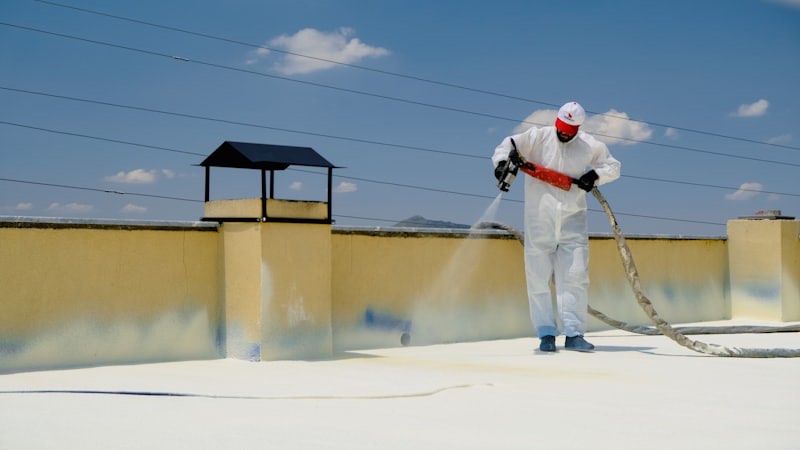
fluid-applied cementitious waterproofing system designed for occupied
balconies, decks, and walkways. Unlike paint or thin "deck sealer,"
ALX is a multi-layer assembly: galvanized lath fastened to the
plywood deck, two coats of cementitious base, a fiberglass fabric
embedded in waterproofing, and a finish coat. It produces a hard,
walkable, slip-resistant, color-customizable surface that's fully
waterproof and can carry foot traffic for 15–20 years. The system is
ICC-ES listed (ESR-2290), Class A fire-rated, and integrates with
standard roof flashing details — which is why it pairs naturally with
a roofing contractor's scope.
When this applies in the North Bay
Marin's hillside neighborhoods — Mill Valley, Tiburon, Sausalito,
San Anselmo, Ross, parts of Belvedere — are dominated by homes with
substantial deck space cantilevered or post-supported off the hillside.
Those decks have three specific weaknesses we see again and again:
1. Wall-to-deck transition leaks. The deck butts into
the wall of the house. The vertical wall flashing has to overlap the
horizontal deck membrane the same way it would overlap a roof shingle.
When the original deck was painted or sealed with caulk, that detail
fails within 3–5 years and water tracks down inside the wall — often
unnoticed until it reaches the room below.
2. Drainage edge. A deck that doesn't drain
correctly to the outer edge ponds water at the wall. Sloped properly
(typical 1/4" per foot toward the drip edge), the surface sheds water
in seconds. Sloped wrong, every storm puts water at the worst possible
spot.
3. Under-deck moisture and rot in support framing.
A deck membrane that has leaked for years leaves the joists damp.
Replacement of the deck surface alone, without addressing the framing
condition, is a band-aid.
ALX is the system we install when a homeowner wants the deck to
behave like a roof — because that's what it is. A roof you walk on.
Warning signs & common mistakes
Where deck waterproofing goes wrong:
- "Deck stain" or "deck sealer" used on a structural deck
over living space. These products are designed for stand-
alone wood decks above grade with airflow underneath. Applied to
a structural plywood deck above a habitable room, they fail
immediately at the transitions.
- No wall flashing integration. The deck membrane
has to step up the wall behind the siding (similar to
step flashing on a roof).
Stopping the membrane at the wall surface and caulking the joint
is the #1 deck-leak failure mode.
- No drip edge at the outer perimeter. Without
proper edge metal, water wicks back under the membrane at the
deck's outer edge. Eventually the OSB or plywood substrate rots
from the outside in. See drip edge.
- Missing
ice & water shield
under the threshold to the door. Wind-driven rain at the
door threshold needs the same shield treatment as a roof valley.
Skipping it means the doorframe is the first thing to rot.
- Patching cracked ALX with elastomeric paint.
Cracks in the field surface are usually substrate movement, not
the membrane. Painting over them traps moisture against the
waterproofing layer. Crack repair on ALX has a specific repair
procedure — paint isn't it.
- Replacing the deck surface without checking the framing.
A new $8,000 deck membrane over rotted joists fails in 18 months.
Open the deck, evaluate the framing condition, repair the
substrate first.
How Northern Pacific handles this
Northern Pacific is a Westcoat ALX-certified installer. On a typical
Marin hillside deck waterproofing scope, we:
1. Strip the existing deck surface to bare plywood or OSB. Inspect
and repair any substrate damage or framing rot.
2. Install the wall-to-deck transition flashing — typically a
25-gauge galvanized step pattern overlapping the wall sheathing
underneath the siding edge, similar to a roof step flashing detail.
3. Install drip edge metal at the
outer perimeter, fastened and lapped per Westcoat's published
detail (Westcoat ESR-2290).
4. Install ice & water shield at door thresholds and at the wall-deck
transition's inside corner.
5. Fasten the galvanized lath. Apply the base coat. Embed fabric.
Apply the second waterproofing coat. Finish coat to the
homeowner's color selection.
6. Final inspection — drainage test (water from a hose toward the
field, confirming clean drain to the drip edge).
A properly installed ALX system on a Marin hillside deck lasts 15–20
years with annual visual inspection. We back the installation with our
workmanship warranty and Westcoat's product warranty. CA Lic. #812250.
What to do next
If your Marin hillside deck has visible cracking, ponding water after
rain, soft spots when walked on, or any sign of leaking into the room
below — that's not a paint job. It's a roof.
Get a free deck waterproofing estimate
Call (415) 456-3482
For broader roof-system context, see
Why Is My Roof Leaking? or
Repair vs Replace
Your Roof.
Frequently asked questions
How long does a Westcoat ALX deck last?
Properly installed Westcoat ALX systems last 15–20 years on Marin hillside decks before they need re-coating. The lifespan depends on UV exposure, the quality of the substrate underneath, drainage, and whether the wall transitions were detailed correctly. Annual visual inspection and addressing any cracks early extends the surface significantly.
Can I just paint my deck with a waterproof coating?
On a stand-alone wood deck above grade with airflow underneath — yes, a quality deck stain is fine. On a structural plywood deck above a habitable room — no. Paint and 'deck sealer' products aren't designed for the wall transitions, drainage details, and joint movement of a structural deck. Within 3–5 years, they fail at the wall and water reaches the room below. The Westcoat ALX system is engineered for the structural-deck application.
Is deck waterproofing the same as roofing?
Architecturally yes — a deck over a habitable room is a roof you walk on. Both need a fully waterproof membrane, proper flashing integration at walls, drainage details at the edge, and a Class A fire rating in WUI zones. The systems are different (ALX vs shingle), but the failure modes and the contractor skill set overlap. This is why roofers — not deck builders — install Westcoat ALX systems.
Do I need a permit to re-waterproof my deck?
It depends on scope. Surface-only re-coats of an existing membrane typically don't require a permit. Tear-off to substrate, framing repair, structural changes, or new construction always require a permit. We pull whatever the jurisdiction requires and coordinate the inspection. Skipping a required permit creates the same resale and insurance problems as skipping one on a roof — don't.
Related guides
Terms in this guide
Related services
Reviewed by
Barry Murrin
Founder & Owner, Northern Pacific Roofing — reviewed for technical accuracy
Last updated:
Methodology
Failure-mode analysis is based on Northern Pacific deck waterproofing assessments across Marin hillside neighborhoods. Installation steps reflect the Westcoat ALX manufacturer specification (ESR-2290 evaluation report).