




What this is
A leaking roof rarely means "the roof is failing." More often, the field
shingles are fine and one specific assembly is the leak source —
flashing, a pipe boot, a valley, or a vent. North Bay homes have a few
recurring leak failure modes driven by atmospheric river rainfall
(November–March), persistent fog in coastal areas, and the age of
the housing stock. This guide is the leak-source diagnostic we use in
the field: what each cause looks like, where it actually originates,
and which need professional repair vs which a homeowner can monitor.
When this applies in the North Bay
Marin and Sonoma rainfall isn't unusual in volume — it's unusual in
concentration. The wettest stretch of January-February can
drop 8–14 inches in a few days. That's when marginal flashing fails:
not in 1-inch storms, but in 5-inch atmospheric rivers.
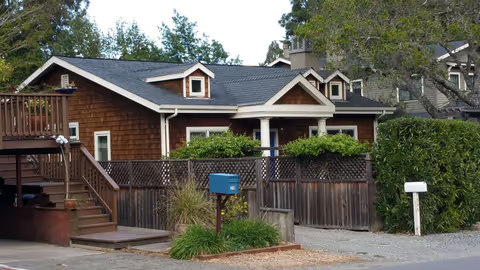
The age of North Bay housing stock matters too. Mid-century Marin homes
have aged flashings, often original to construction. Sonoma County
post-fire rebuilds (2017+) have new everything but sometimes
inconsistent flashing detail depending on the GC. Both produce
predictable leak patterns we see year after year.
Three timing patterns to know:
- Leak appears in the first 1-inch storm of the season.
Usually a debris-clogged valley or a failed pipe boot that's been
failing all summer in dry weather.
- Leak appears only during sustained atmospheric river.
Marginal flashing — passes most storms, fails when the rain rate
exceeds the assembly's drainage capacity.
- Leak appears after a windstorm. Wind lifted a
shingle course and the ice & water shield (if present) is now the
only thing keeping water out — and it's not enough long-term.
Warning signs & common mistakes
The five most common leak sources, by frequency on our service calls:
1. Failed step flashing at
chimneys and walls. Step flashing is layered metal woven
into each shingle course where the roof meets a wall or chimney.
It fails when sealant cracks, when the wall stucco was patched over
the flashing edge, or when the original installer used "L-flashing"
straight runs instead of proper stepped pieces. The leak point is
often above where the stain appears. Repair: replace flashing,
often with a partial shingle course re-set. Don't accept a sealant-
only repair.
2. Pipe boot gasket failure. The rubber gasket around
plumbing vent pipes degrades from UV exposure in 8–12 years. The
leak shows up directly below the vent or one rafter bay down.
Repair: replace the boot. Cheap and fast — and easy to miss in
routine inspections because the gasket cracks invisibly until it
fully fails.
3. Ice & water shield
missing or aged at valleys. Older homes often have valley
metal but no shield underneath. When debris dams the valley during
an atmospheric river, water backs up and pushes under the field
shingles. Repair: open the valley, install new shield, replace
field shingles within 3 feet of the valley.
4. Skylight flashing. Skylights have manufacturer-
specific flashing kits with limited life. Re-flashing during a
re-roof is the cheapest moment; isolated skylight leak repairs
typically require removing surrounding shingles. Don't believe
sealant-only repairs.
5. Condensation mistaken for a leak. Under-ventilated
attics in older Marin homes (especially with new insulation added
without ventilation updates) can produce drips on cold mornings
that look like roof leaks. The cause is moisture, not penetration.
Fix: add intake vents at eaves and exhaust at ridge per
attic ventilation code.
Less common but real:
- Missing drip edge
causing fascia rot and tracked-back leaks at the eave.
- Lifted shingle course from a single wind event.
- Animal-caused damage at vents or eaves.
How Northern Pacific handles this
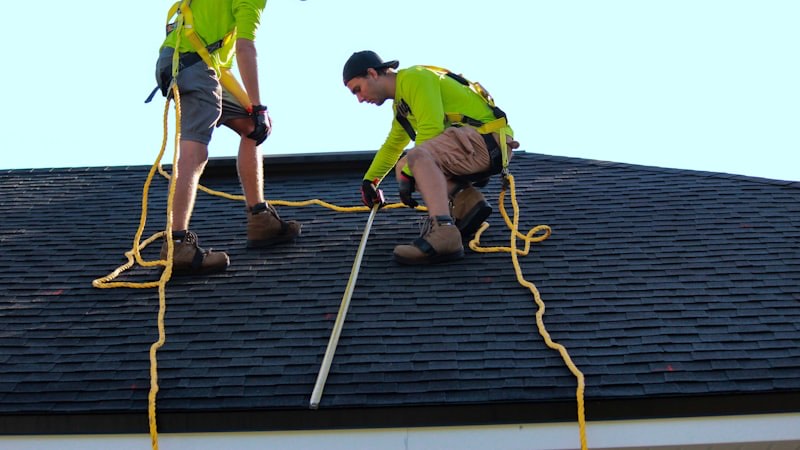
Northern Pacific's standard leak diagnostic is an inspection from above
(the roof surface) and below (the attic, with thermal imaging if needed).
We isolate the entry point — not just the stain location — and document
with photos. When the cause is a flashing or boot, we quote the
isolated repair. When the cause is systemic (multi-slope flashing
failure, aged underlayment across the whole roof), we say so and
walk you through the repair-vs-replace math (see
Repair vs Replace).
We do not run "free roof inspection while we're in the neighborhood"
sales calls. We do not push replacement on a roof that needs a
$400 pipe boot. Our average leak-only repair on a sound roof is under
$1,500, and we tell you up-front when it's that scope.
We've been GAF Master Elite and Malarkey Emerald certified for years —
both certifications include warranty-backed leak-repair workmanship.
CA Lic. #812250.
What to do next
If you've got an active leak right now, stop the immediate water damage
(bucket, plastic) and call. Documented inspection plus a written repair
scope is the fastest path to a real fix.
Book a leak diagnostic inspection
Call (415) 456-3482
If the inspection points to systemic issues, see
Signs Your Roof Needs Replacement and
Repair vs Replace.
Frequently asked questions
Why is the ceiling stain not directly below the visible problem on the roof?
Water rarely drops straight down. It runs along the underside of the roof deck, along framing, and along the top of insulation until it finds a low point — usually a fastener, a seam, or a fixture penetration in the ceiling. The visible drywall stain is 4–8 feet downslope from the actual roof entry in most cases. This is why ground-level diagnosis without an attic inspection misses the real cause.
How do I tell if it's a leak or attic condensation?
Three clues: (1) Leaks worsen during and right after rain; condensation worsens on cold dry mornings after warm humid afternoons. (2) Leaks usually have a clear entry point above; condensation appears as widespread damp insulation or black streaks across the rafters. (3) An attic inspection during dry weather settles it — leak entry points are sealed but visible; condensation shows current moisture without an entry point.
Can I fix a roof leak myself?
Pipe boots and minor sealant work are technically homeowner-doable, but the failure mode you can see is rarely the only one — and walking a 20+ year-old roof is genuinely dangerous. For Marin and Sonoma homes, the cost of a documented professional repair (typically $400–$1,500 for a single-source leak) is worth the warranty and the workmanship guarantee. Sealant-only DIY repairs almost always recur within a season.
Will fixing the leak extend my roof's life?
Yes, often by years — if the underlying field shingles are still sound. A single-source leak on an otherwise healthy 12-year-old roof can be repaired with no impact on the rest of the system's life. On a 22-year-old roof with widespread granule loss, leak repair buys a season or two but doesn't extend the system. The inspection tells you which case you're in.
Related guides
Terms in this guide
Related services
Reviewed by
Barry Murrin
Founder & Owner, Northern Pacific Roofing — reviewed for technical accuracy
Last updated:
Methodology
Failure-mode ranking is based on 24 years of Northern Pacific leak service calls across Marin and Sonoma. The five sources represent ~85% of single-source leaks we diagnose annually.